Docker for Pentesters, Running Security Tools via Containers

Deploying offensive security utilities directly onto a host operating system routinely introduces structural instability. Navigating overlapping runtime environments and volatile system configurations often results in engineers spending more time troubleshooting local environment friction than executing actual audits.
Rather than burdening local hardware with resource-heavy virtual machines, the modern approach involves adopting an immutable, containerized methodology. Leveraging Docker allows security practitioners to encapsulate specialized tools into isolated, ephemeral microservices that can be deployed on-demand without altering the underlying host configuration.
The following segments outline how to instantiate and orchestrate four core reconnaissance and exploitation utilities using clean Docker workflows.
1. Nmap: Network Discovery Without Host Contamiation
Nmap remains the industry benchmark for network mapping. Executing it within an isolated container abstracts the process away from local network interfaces, ensuring access to an uncorrupted, up-to-date binary.
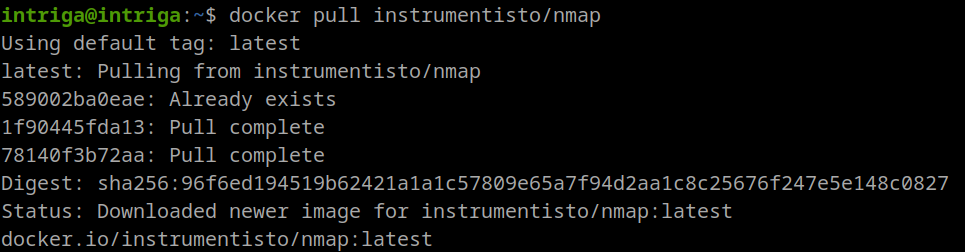
Retrieve the image:
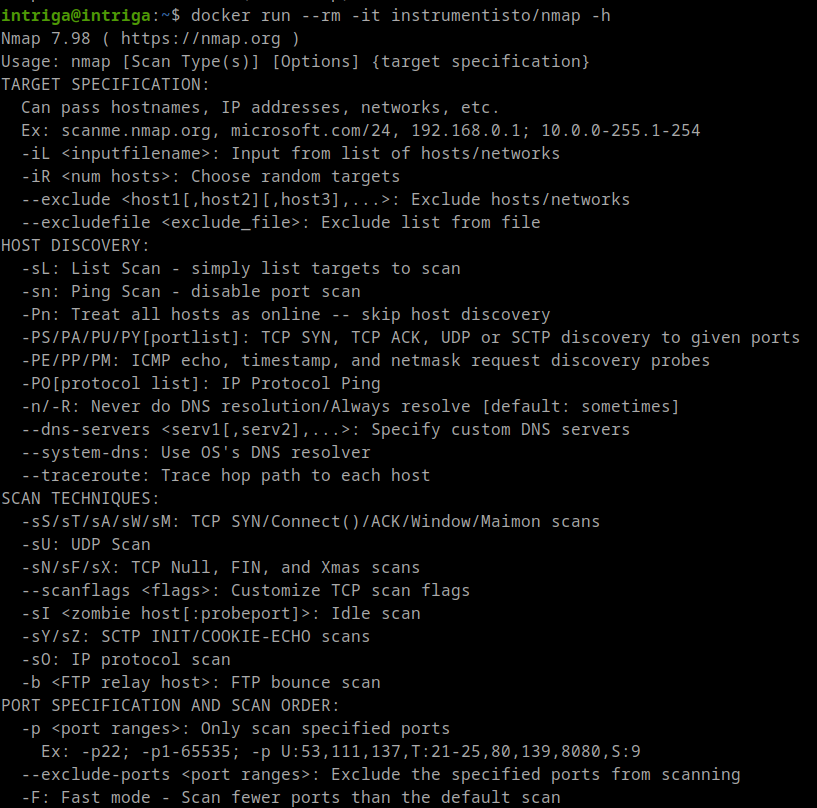
docker pull instrumentisto/nmapVerify runtime parameters:
docker run --rm -it instrumentisto/nmap -hOperational Insight: The --rm flag guarantees the automatic destruction of the container state upon execution completion, mitigating local disk clutter.
2. Nikto: On-Demand Web Server Evaluation
Nikto is a veteran, highly granular web server scanner written in Perl. Instead of manually configuring legacy runtimes on your local system, Docker provides an automated, stable environment engineered explicitly for its execution.
Retrieve the image:
docker pull ghcr.io/sullo/nikto:latestVerify runtime parameters:
docker run --rm ghcr.io/sullo/nikto -h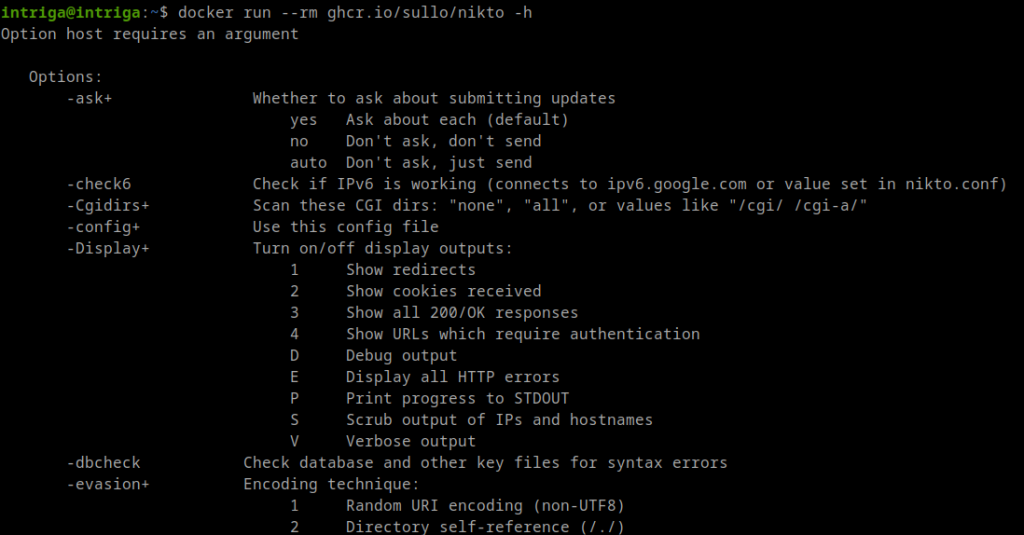
3. Sn1per: Orchestrated Large-Scale Attack Surface Mapping
Sn1per acts as a comprehensive automation framework that coordinates diverse diagnostic tools simultaneously. Its intricate dependency matrix often conflicts with host libraries when installed natively. Containerization gracefully bypasses this issue.
Retrieve the image:
docker pull xer0dayz/sn1perInitialize an interactive shell:
docker run -it xer0dayz/sn1per /bin/bashStandard Target Execution:
sniper -t <TARGET>Advanced Target Execution (Reconnaissance + OSINT):
sniper -t <TARGET> -o -re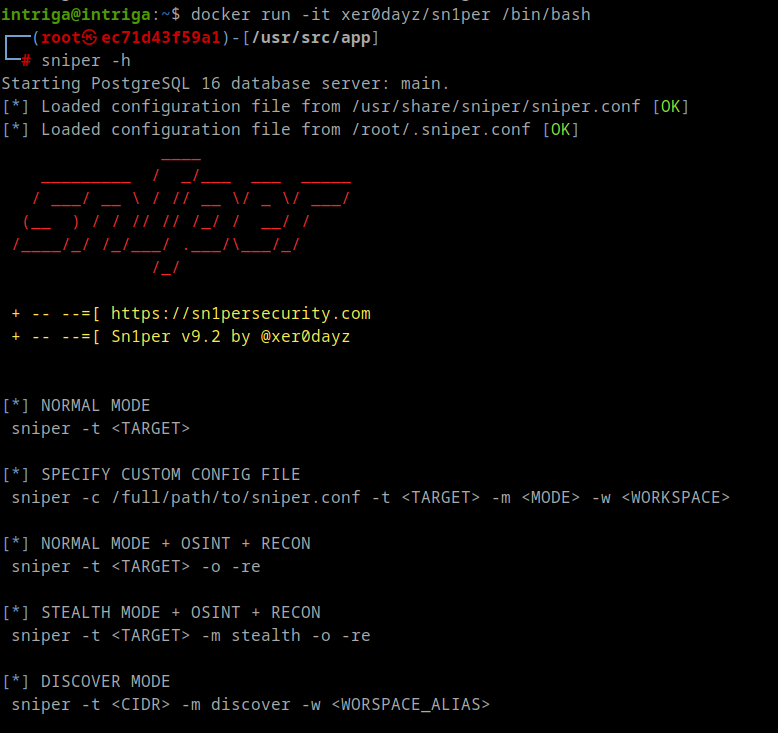
4. XSStrike: Context-Aware Cross-Site Scripting Exploitation
XSStrike leverages intelligent payload generation and contextual analysis rather than brute-forcing static strings. Running this Python-dependent suite within an isolated namespace prevents runtime collisions with local interpreter configurations.
Retrieve the image:
docker pull femtopixel/xsstrikeVerify runtime parameters:
docker run --rm -ti femtopixel/xsstrike -h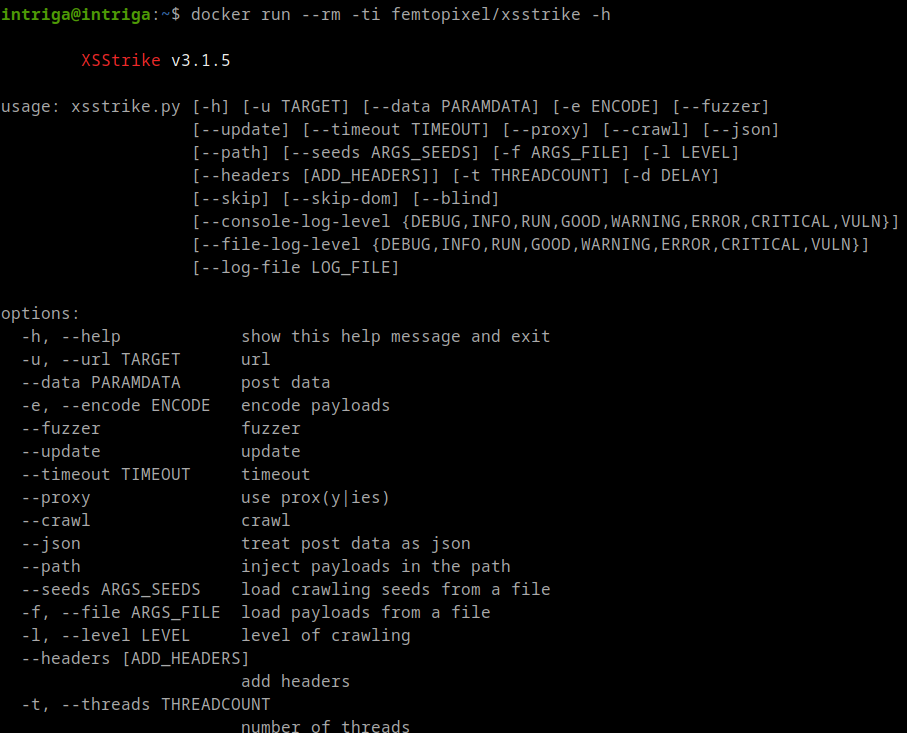
Conclusion: The Ephemeral Infrastructure Advantage
Abstracting pentesting tooling into Docker containers goes beyond mere convenience; it aligns with modern infrastructure engineering principles. By treating security tooling as disposable, stateless assets, practitioners can achieve higher reproducibility, operational speed, and absolute host system integrity.